Journal Article
The Future of Creativity: AI Trends and Insights for 2026 and Beyond
Explore the transformative AI trends shaping art, music, and film in 2026 and beyond. Discover how generative AI is evolving creativity and prepare your artistic practice for the future with Yasmaanik.art.
The Future of Creativity: AI Trends and Insights for 2026 and Beyond
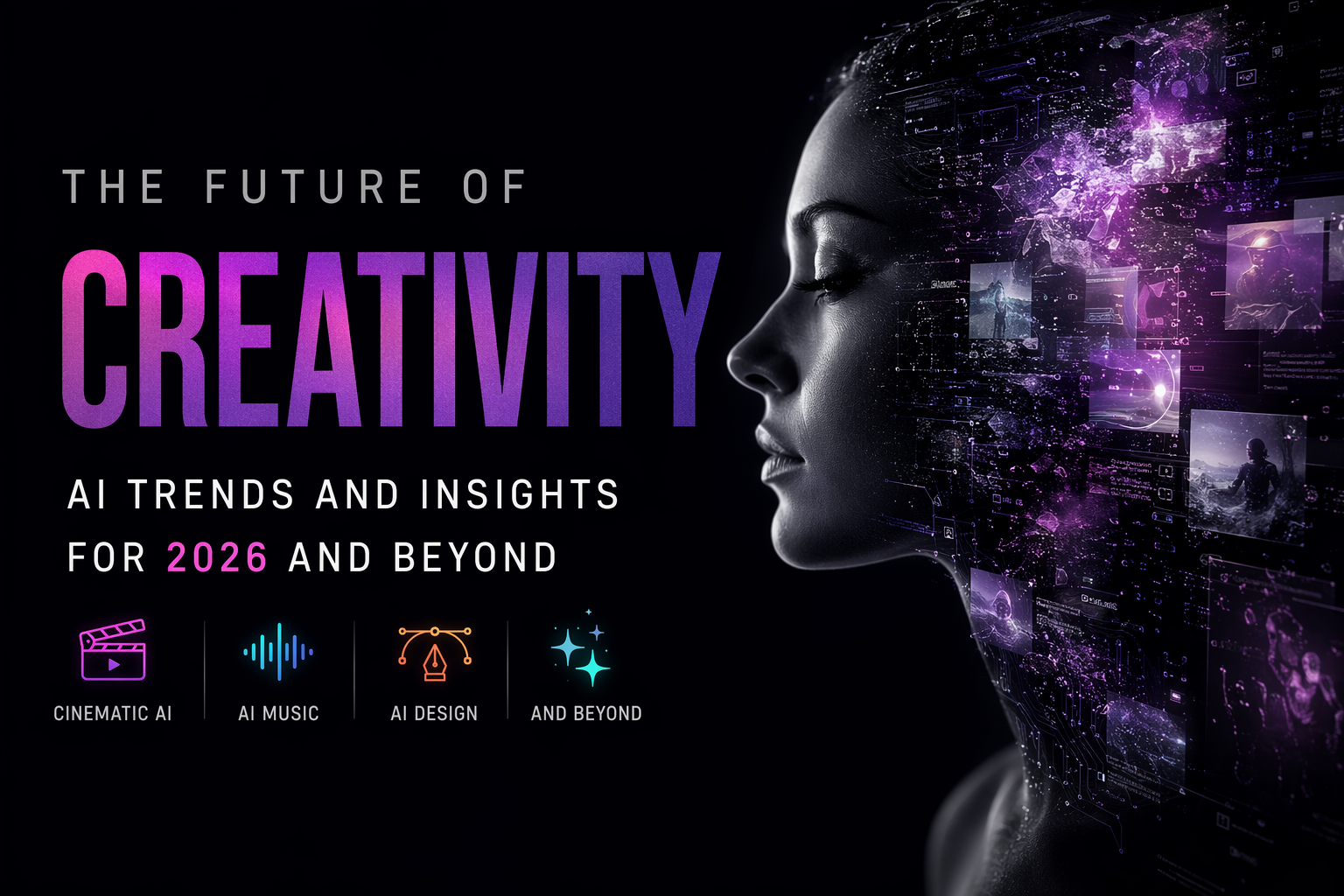
The creative landscape is shifting at an unprecedented pace, largely driven by the relentless march of artificial intelligence. What was once the stuff of science fiction is now an everyday reality for artists, filmmakers, musicians, and designers worldwide. As we navigate towards 2026 and beyond, understanding the future of AI creativity isn't just an advantage—it's a necessity for anyone looking to stay relevant and innovative in their craft. This technological revolution heralds a new era of possibilities, pushing the boundaries of imagination and challenging our traditional notions of art.
At Yasmaanik.art, we've dedicated ourselves to tracking this evolution, curating the most impactful tools and insights for the creative community. This article dives deep into the most significant AI trends 2026 has in store, exploring the profound AI impact on art, music, and film. We'll uncover the latest developments in generative AI evolution, discuss ethical considerations, and provide actionable strategies for adapting your creative practice. Join us as we peek into the near future, where AI doesn't just assist, but truly inspires and transforms.
Shaping Tomorrow: The Evolving Landscape of AI in Creative Fields
The integration of AI into creative industries has moved far beyond simple automation; it's now about intelligent augmentation. AI is no longer merely a tool for efficiency but a collaborative partner, opening doors to artistic expression that were previously unimaginable. From concept generation to final production, AI is weaving itself into every fiber of the creative process, enabling artists to experiment faster, iterate more freely, and produce work with unprecedented scale and detail.
This evolving landscape is characterized by a democratization of complex creative processes. High-quality visual effects, intricate musical compositions, and polished narratives are becoming accessible to independent creators with limited resources, evening the playing field and fostering a vibrant ecosystem of innovation. The rise of sophisticated AI models has led to specialized applications across various domains, each tailored to the unique demands of different creative disciplines. To truly grasp the scope of this transformation, it's essential to recognize how platforms like Yasmaanik.art are providing a vital guide through this intricate web of tools, empowering creators to discover and master the AI technologies most relevant to their vision. Yasmaanik.art: Curating the Future of Art & AI with Yasaman Sharifzadeh delves deeper into this philosophy, showcasing how curated resources are helping shape the future.
Key AI Trends Poised to Transform Art, Music & Film
As we look towards 2026, several AI trends are emerging as critical drivers of change across art, music, and film. These aren't just incremental improvements but fundamental shifts in how creative work is conceived, developed, and brought to life.
Hyper-Personalized Generative Art & Design
Generative AI's ability to produce unique, high-quality images and designs based on text prompts has matured dramatically. In 2026, we're seeing an evolution towards hyper-personalized generative art, where AI models can deeply understand and adapt to an artist's individual style, preferences, and even emotional nuances. This allows designers to create an infinite array of variations, explore complex stylistic themes, and rapidly prototype concepts that would take weeks using traditional methods. AI's capacity for rapid ideation and bespoke asset generation will redefine workflows in graphic design, digital art, and even architectural visualization, offering unparalleled creative freedom. If you're looking to push your visual boundaries, explore resources like Beyond Photoshop: Top AI Design Tools for Graphic & Digital Artists (2026) to see what's possible.
AI-Powered Soundscapes & Algorithmic Composition
The realm of audio is equally being revolutionized. AI music generators are moving beyond basic melody creation to sophisticated algorithmic composition, crafting entire soundscapes, scores, and songs with emotional depth and structural complexity. These tools can generate custom soundtracks that adapt in real-time to narrative changes in games or films, assist in intricate sound design, and even produce fully mastered tracks with professional quality. Musicians and composers are leveraging AI to break through creative blocks, explore new genres, and personalize musical experiences for audiences. The sonic possibilities are expanding exponentially, offering a new palette for artists to paint with. To dive into the cutting edge of audio creation, check out Crafting Soundscapes: The Best AI Music Generators for Artists & Composers (2026).
Cinematic AI: From Script to Screen
Filmmaking, one of the most resource-intensive creative fields, is experiencing a profound transformation. Cinematic AI tools are now capable of generating entire video sequences from text, animating complex characters with realistic physics, and even assisting with virtual set design and visual effects. The laborious processes of pre-visualization, storyboarding, and even initial editing are being streamlined, empowering filmmakers to visualize their narratives faster and more cost-effectively. This generative AI evolution in video promises to democratize filmmaking, allowing independent creators to produce high-production-value content previously reserved for major studios. For those ready to pioneer the next generation of cinema, guides like Unleash Your Vision: Best AI Video Generators for Filmmakers (2026 Edition) are invaluable.
Ethical Considerations: AI, Authorship, and the Human Touch
With the rapid advancements in AI, particularly in generative models, comes a pressing need to address the ethical implications. Questions of authorship, copyright, and originality are at the forefront of discussions. When an AI generates an artwork, who owns the intellectual property? What constitutes "original" when the machine learns from vast datasets of existing human creations? These are not trivial questions but fundamental challenges to the legal and philosophical frameworks of creativity.
The conversation extends to the issue of bias and representation. AI models are trained on existing data, which often reflects societal biases. Without careful curation and ethical development, AI could perpetuate or even amplify these biases in the creative works it produces. The AI impact on art demands a proactive approach, with creators, developers, and policymakers working together to establish fair use policies, transparent data sourcing, and equitable access to these powerful tools. Ultimately, while AI offers incredible capabilities, the role of the human creator in providing vision, ethical guidance, and emotional resonance remains paramount. For more on these critical discussions, refer to our Frequently Asked Questions: AI Tools for Creators, Filmmakers & Musicians.
Preparing for 2026 and Beyond: Adapting Your Creative Practice
The most important insight for creators is that AI isn't coming to replace you; it's coming to equip you with superpowers. Adapting to the future of AI creativity means embracing continuous learning and re-evaluating your workflow. Here's how to prepare:
- Embrace Experimentation: The best way to understand AI's potential is to actively experiment with new tools. Don't be afraid to try, fail, and discover unexpected applications. The landscape changes quickly, and hands-on experience is your best guide.
- Focus on Conceptualization & Storytelling: While AI excels at execution, human creativity still reigns supreme in conceptualizing groundbreaking ideas, infusing emotional depth, and crafting compelling narratives. Hone these uniquely human skills, making AI your executive assistant for the technical heavy lifting.
- Master Prompt Engineering: Learning to communicate effectively with AI models is becoming a core creative skill. Understanding how to craft precise, evocative prompts will unlock the full potential of generative tools and allow you to direct AI with artistic intention.
- Integrate AI Thoughtfully: Look for ways to integrate AI tools seamlessly into your existing workflows to automate tedious tasks, generate variations, or assist in research, rather than disrupting your entire process. This augmentation allows you to focus on the higher-level creative decisions.
- Stay Informed & Connected: The AI space is dynamic. Platforms like Yasmaanik.art's Journal provide essential insights and curated directories to help you discover the latest tools and best practices. Staying connected with the wider community will also foster knowledge sharing and collaboration.
By proactively engaging with AI, creatives can position themselves at the forefront of this revolution, transforming challenges into unparalleled opportunities for innovation. Understanding how to efficiently integrate these tools into your daily projects is key to staying ahead. Discover advanced strategies for maximizing your creative output by reading Mastering AI-Powered Workflows: A Guide for Creative Professionals.
FAQ
Q: Will AI replace human artists and creators?
A: While AI can generate impressive creative works, it's more accurately seen as an augmentation tool. It automates repetitive tasks and expands possibilities, but the human element of vision, conceptualization, emotional resonance, and ethical judgment remains irreplaceable. AI will likely shift the roles of creators rather than eliminate them.
Q: How can I start using AI in my creative work if I'm new to it?
A: Begin by identifying a pain point in your current creative process where AI could help, such as generating initial ideas, automating image upscaling, or creating background music. Explore user-friendly, free AI tools first, often found in curated directories. Experiment with simple prompts and observe the results.
Q: What are the biggest challenges of AI in creativity?
A: Key challenges include navigating ethical concerns around copyright and ownership, managing data privacy, combating potential biases in AI-generated content, and ensuring responsible development. Additionally, the learning curve for new tools and the need to discern genuine value from hype can be challenging.
Q: Where can I find reliable AI tools for creators?
A: Curated directories, like Yasmaanik.art, are excellent resources. They handpick tools, provide factual descriptions, and often include pros, cons, and use cases, making it easier to find high-quality, relevant AI applications for specific creative tasks in filmmaking, music, design, and more.
Conclusion
The future of AI creativity is not a distant horizon; it is here, reshaping how art, music, and film are made. As we move into 2026 and beyond, the AI trends point towards a future where intelligent tools are indispensable partners, amplifying human ingenuity and pushing artistic boundaries. The generative AI evolution offers unprecedented power to creators, from hyper-personalized design to cinematic visions born from text prompts.
Yet, this exciting future also carries significant ethical responsibilities, urging us to consider authorship, bias, and the enduring value of the human touch. For creators, the path forward involves embracing these tools, continuous learning, and focusing on the unique human attributes that AI cannot replicate. At Yasmaanik.art, we remain committed to curating the best AI tools and insights, helping you navigate this transformative era. Dive into our comprehensive directory and journal to discover how you can harness the power of AI to supercharge your creative endeavors today.