
Journal Article
Storytelling Supercharged: Essential AI Writing Tools for Creative Professionals (2026)
Discover the best AI writing tools for creators, filmmakers, and musicians in 2026. Supercharge your storytelling, overcome writer's block, and refine your content with cutting-edge AI. Explore essential AI content generation and creative AI writing solutions.
Storytelling Supercharged: Essential AI Writing Tools for Creative Professionals (2026)
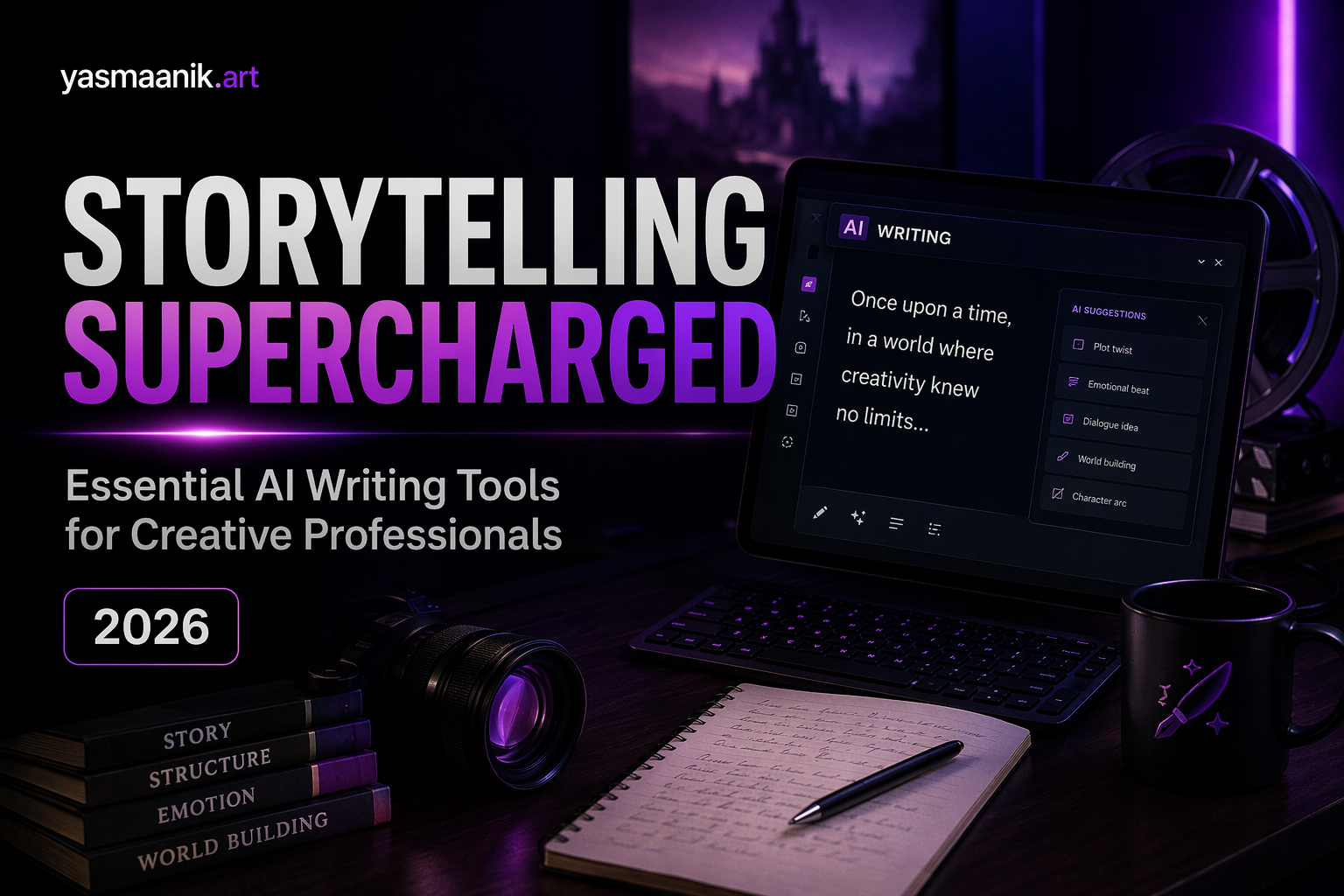
Every creative professional knows the struggle: the blank page staring back, the elusive perfect phrase, the daunting task of transforming a nascent idea into compelling narrative. Whether you're a filmmaker crafting a script, a musician penning lyrics, a designer articulating a vision, or a content creator weaving engaging stories, the demand for high-quality, impactful writing is constant. In 2026, AI writing tools are no longer a futuristic novelty; they are indispensable partners for unleashing your creative potential.
These sophisticated platforms are revolutionizing how stories are conceived, developed, and polished. From generating initial concepts to refining prose, AI content generation offers unparalleled efficiency and innovative avenues for expression. This guide delves into the essential AI writing tools that are empowering creative professionals to supercharge their storytelling, bypass creative blocks, and produce content that resonates deeply with audiences. Join us as we explore how these intelligent assistants are shaping the future of creative writing.
From Blank Page to Bestseller: AI's Role in Writing
The journey from a blank page to a finished piece of writing is often arduous, marked by moments of inspiration and bouts of frustration. Historically, writers relied solely on their muse, notebooks, and endless cups of coffee. Today, AI has entered the creative arena, not to replace the human touch, but to augment it, transforming the writing process into a more fluid and efficient endeavor. The integration of creative AI writing is changing the game for individuals and teams alike, offering new ways to approach challenges that have plagued writers for centuries.
AI's role extends far beyond simple grammar checks. Modern AI writing tools can analyze complex textual data, understand narrative structures, mimic diverse writing styles, and even generate original content. This means that creators can spend less time on repetitive tasks and more time focusing on the core imaginative work that makes their storytelling unique. The goal isn't to automate creativity, but to equip creatives with powerful allies in their quest to tell better, more captivating stories.
AI as a Collaborative Partner
Think of AI not as an automaton, but as a tireless, highly knowledgeable co-writer. It can brainstorm ideas, suggest alternative phrasings, expand on underdeveloped concepts, and even help structure complex narratives. For filmmakers, this could mean rapidly generating dialogue options or scene descriptions. For musicians, it might involve exploring lyrical themes or refining song structures. This collaborative dynamic allows for rapid iteration and experimentation, significantly accelerating the creative cycle. The ability of AI to learn from user input means it constantly adapts to your unique voice and style, making it an increasingly personalized assistant.
Streamlining the Creative Workflow
Efficiency is paramount in today's fast-paced creative industries. AI writing tools streamline virtually every stage of the writing workflow. From initial concept validation to final proofreading, AI can handle tasks that traditionally consumed valuable time and energy. This includes conducting rapid research, summarizing lengthy documents, translating content, and ensuring stylistic consistency across multiple pieces. By offloading these often-tedious responsibilities, creative professionals can dedicate their focus to higher-level strategic thinking and emotional depth, ultimately enhancing the quality and impact of their work.
Top AI Tools to Enhance Your Creative Writing Process
The landscape of AI writing tools is vast and continually evolving, offering specialized solutions for every facet of the creative process. Whether you're a novice looking for a helping hand or a seasoned professional seeking an edge, there's an AI assistant designed to meet your specific needs. Yasmaanik.art curates an extensive directory of such tools, making it easy to find the perfect fit for your projects. The Ultimate AI Tools Directory for Creators: Yasmaanik.art Curations provides a comprehensive overview of the incredible resources available.
These tools typically fall into several categories, each addressing a unique aspect of creative writing, from initial ideation to the final polish. Understanding these categories will help you navigate the options and select the most effective aids for your particular craft.
Idea Generation & Brainstorming Tools
Facing a blank page can be paralyzing. AI tools designed for idea generation can provide the spark you need. These platforms leverage large language models to generate prompts, plot twists, character backstories, world-building details, and even entire story outlines based on your initial input. They can help break through creative blocks by offering fresh perspectives or combining disparate concepts in novel ways. Imagine instantly receiving dozens of unique concepts for a film subplot or song lyrics, ready for you to adapt and refine.
Drafting & Content Expansion Assistants
Once you have an idea, AI can help you flesh it out. These tools are adept at expanding short ideas into longer paragraphs, articles, or script scenes. They can maintain a consistent tone and style, generate descriptive language, and even help you overcome difficult transitions. For creators with tight deadlines, these assistants can accelerate the drafting process, allowing for quicker content production and iterative development. While the AI provides a robust foundation, the human writer remains in control, shaping the narrative and infusing it with personal vision.
Refinement & Editing Platforms
The final stages of writing involve meticulous editing and refinement. AI-powered editing tools go far beyond basic spell check. They can analyze your prose for clarity, conciseness, coherence, and impact. These tools can suggest improvements in sentence structure, identify awkward phrasing, check for plagiarism, and even ensure your content aligns with specific tone guidelines. For creative professionals, this means delivering polished, error-free work that maintains a professional standard, freeing up more time for the creative aspects of their project.
Overcoming Writer's Block: AI Prompts & Idea Generation
Writer's block is a universal foe for creative professionals. That feeling of being stuck, unable to generate new ideas or move a story forward, can be incredibly frustrating. Fortunately, AI has emerged as a powerful antidote, offering innovative ways to kickstart your imagination and sustain your creative flow. By leveraging storytelling AI for prompts and ideation, you can transform moments of stagnation into opportunities for breakthrough. This directly addresses some of the core creative pain points that AI solves for artists.
The key lies in understanding how to effectively interact with these intelligent systems. AI isn't a mind-reader, but it is an incredibly sophisticated pattern-matcher and idea generator. With the right input, it can unlock a cascade of possibilities, helping you explore new narrative directions or re-energize existing concepts.
The Power of Prompts
Prompt engineering – the art of crafting effective instructions for AI – is central to overcoming writer's block. Instead of simply asking "write a story," learn to provide specific constraints, desired outcomes, character archetypes, mood, or genre. For example, "Generate three plot twists for a sci-fi mystery film set on a desolate lunar colony, where the main character is a disillusioned ex-astronaut haunted by a past mission." The more detailed and imaginative your prompt, the more tailored and inspiring the AI's response will be. Experiment with different parameters to discover unexpected creative avenues.
Exploring New Narrative Avenues
AI can help you venture into uncharted narrative territory. If your story feels predictable, ask the AI to introduce a morally ambiguous character, an unexpected magical element, or a sudden change in perspective. If your music lyrics are stuck on a single theme, prompt the AI to explore metaphors related to a different field, like astrophysics or ancient mythology. This process of collaborative exploration with AI can reveal entirely new dimensions to your work, pushing the boundaries of your original concept and fostering true creative AI writing.
Ethical Guidelines for Using AI in Creative Writing
While AI writing tools offer unprecedented creative assistance, their ethical integration is paramount. As creative professionals, our integrity, originality, and responsibility to our audience remain at the core of our craft. Navigating the evolving landscape of AI requires thoughtful consideration of authenticity, attribution, and the potential impact on human creativity.
The future of creativity, as explored in articles like The Future of Creativity: AI Trends and Insights for 2026 and Beyond, heavily emphasizes the symbiotic relationship between human and machine. Ensuring ethical practices upholds this balance and fosters a sustainable environment for innovation.
Maintaining Authenticity and Originality
The primary concern for many creatives is the preservation of their unique voice and originality. While AI can generate text, the distinctive nuance, emotional depth, and personal experience that define truly great creative work still stem from the human creator. Use AI as a springboard for ideas, a drafting assistant, or a refinement tool, but always ensure your final output reflects your vision, values, and unique artistic fingerprint. The AI's output should be a malleable resource, not a final product in itself.
Transparency and Disclosure
In some contexts, particularly for commercial or published works, transparency about AI's involvement may become increasingly important. While you might not need to declare every grammar suggestion, for significant contributions like co-written sections or AI-generated plots, consider how and when to disclose AI assistance. This fosters trust with your audience and colleagues. The goal is to avoid misrepresenting AI-generated content as purely human-created, especially when the lines become blurred.
Responsible AI Integration
Beyond originality, consider broader ethical implications. Ensure the data used to train the AI tools you employ is ethically sourced and doesn't perpetuate biases. Be mindful of potential copyright issues if the AI "borrows" too heavily from existing works without proper transformation. Ultimately, responsible AI integration means using these tools to elevate human creativity and productivity, always upholding ethical standards and promoting a fair, innovative creative ecosystem. For those interested in optimizing their entire creative process with AI, consider exploring Mastering AI-Powered Workflows: A Guide for Creative Professionals.
Frequently Asked Questions
Q: Can AI writing tools replace human writers?
A: No, AI writing tools are designed to assist and augment human creativity, not replace it. They can handle repetitive tasks, generate ideas, and refine text, but the nuanced understanding, emotional depth, and unique artistic vision come from the human creator. AI is a powerful co-pilot, not the pilot.
Q: Are AI-generated stories truly original?
A: AI models generate text by identifying patterns in vast datasets. While the output can be unique combinations of these patterns, the concept of "originality" is complex. It's crucial for human creators to review, adapt, and infuse AI-generated content with their own unique perspective to ensure true originality and avoid unintentional plagiarism.
Q: What is the best AI writing tool for creative professionals?
A: The "best" tool depends entirely on your specific needs and creative process. Some excel at brainstorming, others at long-form content generation, and many at editing and refinement. We recommend exploring directories like Yasmaanik.art's curated list to find tools tailored to your craft, whether it's filmmaking, music, or design.
Q: Can I use AI writing tools for commercial projects?
A: Yes, many creative professionals use AI writing tools for commercial projects. However, it's essential to understand the terms of service and licensing agreements of each specific tool regarding commercial use and ownership of AI-generated content. Always prioritize ethical considerations and maintain your distinct creative voice.
Conclusion
The evolution of AI writing tools marks a transformative era for creative professionals. From overcoming the daunting blank page to meticulously polishing your prose, these intelligent assistants are poised to supercharge every facet of your storytelling journey. In 2026, embracing creative AI writing isn't just about staying current; it's about unlocking new dimensions of productivity, innovation, and artistic expression.
By leveraging AI for idea generation, content expansion, and meticulous refinement, creators can reclaim valuable time, break through creative impasses, and focus on the profound human elements that make their stories resonate. Yasmaanik.art is your dedicated guide in this exciting new landscape, continually curating the most impactful AI tools to empower your craft. We invite you to explore our directory and embark on a future where your creative potential knows no bounds. Discover the perfect AI writing tool to amplify your voice and bring your most ambitious stories to life today.